
- EN
Cemented carbide is a kind of cermet, and its composition is: the matrix is metal carbides such as tungsten carbide powder (such as WC, TiC, TaC, etc.) supplemented by one and/or several refractory metal powders ( Carbide, nitride (such as titanium carbide, tantalum carbide, niobium carbide, etc.) Cutting tools for tough materials, as well as making cold working molds, measuring tools, and high wear-resistant parts that are not affected by impact and vibration, etc.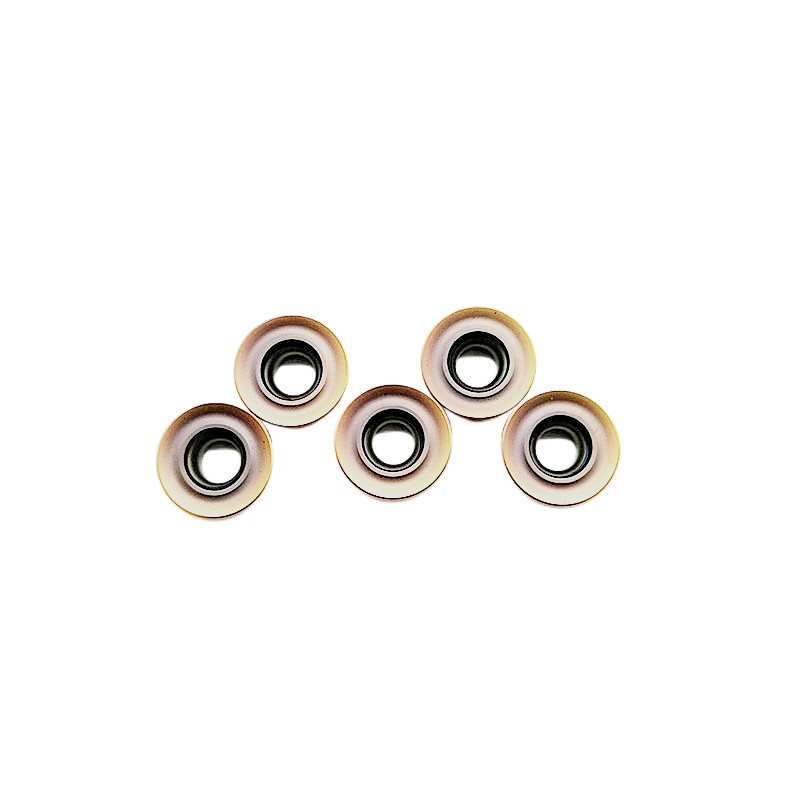
Cemented carbide is the most important use of tungsten resources. The consumption of cemented carbide is about 72% in Europe, 66% in Japan, and 54% in China. The gradual increase in demand for tungsten due to economic development is mainly due to the increase in demand for cemented carbide. China's demand for tungsten accounts for 64% of the world; Europe, America and Japan have shrunk slightly, Europe has dropped from 26% to 14%, the United States has dropped from 14% to 9%, Japan has dropped from 13% to 7%, and other regions have not changed much. Increased from 6% to 7%.
2. What are the characteristics of cemented carbide?
(1) High hardness, wear resistance and red hardness
The hardness of cemented carbide at room temperature can reach 86-93HRA, which is equivalent to 69-81HRC. It can maintain high hardness at 900-1000°C and has excellent wear resistance. Compared with high-speed tool steel, the cutting speed can be 4-7 times higher, the service life is 5-80 times longer, and it can cut hard materials with a hardness up to 50HRC.
(2) High strength and elastic modulus
The compressive strength of cemented carbide is as high as 6000MPa, and the modulus of elasticity is (4-7)×105MPa, both of which are higher than that of high-speed steel. But its bending strength is low, generally 1000-3000MPa.
(3) Good corrosion resistance and oxidation resistance
Generally, it can resist the corrosion of atmosphere, acid, alkali, etc., and is not easy to oxidize.
(4) The coefficient of linear expansion is small
The shape and size are stable when working.
(5) Shaped products are no longer processed and regrinded
Due to the high hardness and brittleness of cemented carbide, no cutting or regrinding will be carried out after powder metallurgy forming and sintering. When reprocessing is required, only electrical machining such as electric spark, wire cutting, electrolytic grinding or special grinding wheel grinding can be used. cut. A product of a certain specification usually made of cemented carbide, which is used on the cutter body or mold body by brazing, bonding or mechanical clamping.
Sweden Sandvik positions extra-coarse cemented carbide grades as S-Grade. The grain size of coarse-grained cemented carbide, ultra-coarse, and extra-coarse-grained cemented carbide are widely used in petroleum drill teeth, coal cutter teeth, and road surface cold milling. Machine teeth, stamping dies, rolls and other fields.
4.2 Classification by degree of processing
According to different production and processing degrees, cemented carbide products are divided into cemented carbide blanks (sintered state), cemented carbide finishing products, and cemented carbide coating products; there are more detailed classifications in products of different processing states, such as The degree of finishing is different, and the processing technology is also different; the coated cemented carbide is divided into PVD and CVD according to the coating (titanium nitride (TiN) titanium carbonitride (TiCN) aluminum oxide (Al2O3)) process. .
4.3 Classification by Application
According to different uses, the main product categories of cemented carbide include cutting tools, rock drilling tools, mining tools, drilling tools, measuring tools, wear-resistant parts, metal abrasives, cylinder linings, precision bearings, nozzles, metal molds (such as wire drawing dies) , bolt molds, nut molds, etc.). There are many classifications of different categories of carbide tools and tools. For example, carbide tools are divided into turning tools, milling cutters, planers, drills, boring tools, etc., which are used for cutting cast iron, non-ferrous metals, plastics, chemical fibers, and graphite. , glass, stone and ordinary steel, and can also be used to cut heat-resistant steel, stainless steel, high manganese steel, tool steel and other difficult-to-process materials.
According to the use of cemented carbide, it can be divided into:
(1) Cutting tools: used as a variety of cutting tools. Such as: welding tools, CNC tools, solid carbide drills, PCB, etc. The cemented carbide consumption of cutting tools in my country accounts for about 1/3 of the entire cemented carbide output.
(2) Mining tools: mainly used for drill bits for percussion rock drilling, drill bits for geological exploration, down-the-hole drills, roller cone drills and coal cutter picks for mine oil fields, impact drills for building materials industry, etc. Cemented carbide for geology and mining in my country accounts for about 25% of the total production of cemented carbide.
(3) Moulds: wire drawing dies, cold heading dies, extrusion dies, stamping dies, drawing dies and rolls, etc. Cemented carbide used for various molds accounts for about 8% of the total production of cemented carbide.
(4) Structural parts: such as compressor pistons, lathe chucks, grinder spindles, bearing journals, etc.
(5) Wear-resistant parts: such as nozzles, guide rails, plungers, balls, tire studs, snow plow boards, etc.
(6) Cavities for high pressure and high temperature resistance: top hammers, pressure cylinders and other products.
(7) Other uses: such as watch chains, watch cases, zipper pulls for high-end bags, hard alloy trademarks, etc.
4.4 Powder by metal binder chemical composition
Tungsten cobalt (ISOK grade) (WC+Co)
The main components are tungsten carbide (WC) and binder cobalt (Co). Its grade is composed of "YG" (the initials of the Chinese pinyin of "hard, cobalt") and the percentage of the average cobalt content. For example, YG8 means that the average WCo=8%, and the rest is tungsten-cobalt cemented carbide of tungsten carbide. General tungsten-cobalt alloys are mainly used in: cemented carbide tools, molds and geological and mineral products.
Tungsten Cobalt Titanium (ISOP grade) (WC+TiC+Co)
The main components are tungsten carbide, titanium carbide (TiC) and cobalt. Its grade is composed of "YT" (the initials of the Chinese pinyin of "hard, titanium") and the average content of titanium carbide. For example, YT15 means that the average TiC=15%, and the rest is tungsten carbide and cobalt-based tungsten-titanium-cobalt cemented carbide.
Tungsten titanium tantalum (niobium) added rare metal carbides (ISOM grade) (WC+TiC+TaC(NbC)+Co)
The main components are tungsten carbide, titanium carbide, tantalum carbide (or niobium carbide) and cobalt. This type of cemented carbide is also called general cemented carbide or universal cemented carbide. Its grade is composed of "YW" (the initials of the Chinese pinyin of "hard" and "wan") plus a sequence number, such as YW1.
Cermet cemented carbide (TiN(TiC)+WC+Mo2C+Ni(Co))
Cermet cemented carbide is a kind of metal carbide powder with high melting point and high hardness (such as WC, TiC, etc.) mixed with binder (Co, Ni, etc.), pressurized and then sintered Powder metallurgy material has the characteristics of high hardness, high compressive strength, high wear resistance and high brittleness. It cannot be forged and heat treated. It is mainly used to make inserts for multi-station progressive dies and large-diameter deep-drawing dies.
Coated Carbide
Coated cemented carbide is to deposit a layer of TiC, TiN, TiB2, ZrN, CrN, AI2O3, TiCN, B4C, SiC, BN, TiAIN, diamond and other substances on the surface of the alloy, which doubles the performance of the tool.
Steel Bonded Carbide
The main component is steel, and a type of cemented carbide with TiC or WC as the hard phase. Its notable feature is that it can be heat treated and machined, and it is a type of intermediate alloy between tool steel and cemented carbide.
Other cemented carbide
For example, Cr3C2-based cemented carbide, which is composed of Cr3C2 as the main component and Ni or Ni-W as a binder, is usually used as wear-resistant and corrosion-resistant parts.
In addition to cemented carbide, there are two important types of cutting tool materials, one is ceramic materials, including alumina series (white pottery), silicon nitride series and sialon ceramics (Si3N4/Al2O3). The other is superhard materials, polycrystalline diamond (PCD) and polycrystalline cubic boron nitride PCBN.
4.5 Classification by processed material and tool material selection
Classification according to the scope of use of alloys, with the continuous development of the cemented carbide industry, the naming rules of various countries are inconsistent, even the names of different manufacturers in the same country are also different, for the convenience of users, the International Organization for Standardization has stipulated the following unified classification methods There are three types of P, M, K and so on.
Type P: P01, P05, P10, P15, P20, P25, P30, P40
Processing steel, steel castings such as ordinary carbon structural steel (such as Q235-A.F), high-quality carbon structural steel (such as 45 steel, 50 manganese, 20G, etc.), carbon tool steel (such as T7, T7A, T8, T8A, T13 , T13A, etc.), cutting grades generally choose W-Co-Ti alloys such as YT5, YT14, YT15, YT15R, YT05, YT30, YC101, YC201, YC301, YC45, etc.;
Type M: M10, M20, M30, M40
General-purpose alloys, usually used for cutting difficult-to-machine materials such as stainless steel and high-hardness cast iron; processing austenitic/ferritic/martensitic stainless steel (such as 1Cr18Ni9Ti, 0Cr19Ni, 1Cr17Mo, 0Cr13Al, 3Cr13, 7Cr17, 1Cr18Ni11Si4AlTi, 0Cr26Ni5Mo2), casting Steel, manganese steel (40Mn18Cr3, 50Mn18Cr4, etc.), alloy steel (carbon steel containing alloy elements such as Ni, Si, Co, Al, Cr, W, Mo, V, Ti, Nb), alloy cast iron, malleable cast iron, easy cutting For steel (Y12, Y15, Y30, Y40Mn, etc.), the cutting grade is W—Co—Ti—Ta (Nb) alloys, such as YW1, YW2, YW3, YS8, YS25, YM101, YM201, YM301, YC201, etc.
Class K: K05, K10, K20, K30, K40
Short-chip alloys, mainly used for cutting cast iron and non-ferrous metals, as well as non-metallic materials including plastics and stone; mainly for processing ordinary cast iron, difficult-to-machine cast iron (chilled cast iron, high-chromium cast iron, high-silicon cast iron), short-chip malleable cast iron , generally use W—Co alloys, such as YG3X, YG3, YG6X, YG6, YG6A, YG8, YG8N, YD101, YD201, YD301, etc.
Class N
For processing non-ferrous metals and inorganic materials (aluminum, magnesium, copper, brass, plastic, etc.), W—Co alloys and cermets are generally used. W—Co alloys are mostly fine-grained and ultra-fine-grained alloys, YG6X, YF06, YM201, YD201, etc.
Class S
Heat-resistant high-quality alloys are high-temperature alloys (Fe-based, Fe-Ni-based, Ni-based, Co-based, Ti-based alloys, such as GH1015, GH2036, GH3128, GH4033, K211, K406, K640, TA2, TA8, TB1, TB2, TC1 ~TC6, etc.), in addition to Ti-based superalloys, generally W—Co—Ti—Ta (Nb) or W—Co alloys can be used, such as YS8, YM201, YM301, YG6X, YG8, YW2, YW3, YD201, etc. ; and Ti-based superalloys should use W-Co alloys that do not contain Ti, such as YG8, YG6X, YG8N, and YG6A. Ideally, ultrafine-grained alloy grades should be used.
Class H
For hardened materials (GCr15 quenched steel, Cr12, T12A, etc.), traditional grades should be YM101, YM201, YS8, YG8N, YNG151, etc., and it is best to use cubic boron nitride blades.
4.6 Classification by shape
Carbide Spheroid
Cemented carbide balls are mainly composed of high-hardness refractory metal carbide (WC, TiC) micron-sized powders. Common cemented carbides include YG, YN, YT, and YW series. Commonly used cemented carbide balls mainly include YG6 cemented carbide balls, YG6x cemented carbide balls, YG8 cemented carbide balls, YG13 cemented carbide balls, G20 cemented carbide balls, YN6 cemented carbide balls, YN9 cemented carbide balls, YN12 cemented carbide ball, YT5 cemented carbide ball. YT15 cemented carbide ball.
Carbide Rod
The main features of cemented carbide rods are stable mechanical properties, easy welding, high wear resistance and high impact resistance. Carbide rods are mainly used for carbide rods and are mainly suitable for drills, end mills, and reamers. It can also be used for cutting, punching and measuring tools. It is used in papermaking, packaging, printing, non-ferrous metal processing industries. In addition, it is also widely used in processing high-speed steel cutters, carbide milling cutters, carbide cutters, aviation cutters, carbide drills, milling core drills, high-speed steel, milling cutters, micro-end milling cutters, reamers , Electronic tools, step drills, metal cutting saws, double margin drills, gun barrels, angle milling cutters, carbide rotary files, etc. Carbide rods can be used not only for cutting and drilling tools but also as input pins, various roll wear parts and structural materials. In addition, it can be widely used in many fields, such as machinery, chemical industry, petroleum, metallurgy, electronics and national defense industry.
Hard alloy plate
Carbide plate, with good durability and strong impact resistance, can be used in hardware and standard stamping dies. Tungsten carbide plates are widely used in the electronics industry, motor rotors, stators, LED lead frames, EI silicon steel sheets, etc.
4.7 Cemented carbide product categories defined by national standards
Up to now, my country has issued relevant industry standards for cemented carbide products:
Carbide indexable insert fillet radius, non-porous carbide indexable insert, carbide indexable milling insert, carbide drill bit for rock drilling, carbide turning tool, geology, mine Carbide for tools, carbide for wear-resistant parts, carbide burr-cylindrical burr (type A), tungsten carbide burr-cylindrical ball-end burr (type C), tungsten carbide burr File No.-Spherical Rotary File (Type D), Carbide Rotary File-Oval Rotary File (Type E), Carbide Rotary File-Curved Round Head Rotary File (Type F), Carbide Rotary File- Curved pointed burrs (type G), carbide burrs - torch burrs (type H), carbide burrs - 60° and 90° conical burrs (type J and K), hard metal burrs Carbide burr-conical round head burr (L type), carbide burr-conical point burr (M type), carbide burr-inverted cone burr (N type), hard alloy burr Carbide staggered tooth three-sided edge milling cutter, carbide twist drill with tapered shank, carbide T-slot milling cutter, carbide indexable insert with rounded hole fixed, hard alloy with rounded counterbore fixed Alloy indexable inserts, solid carbide straight shank end mills, carbide teeth for mining and oil field drill bits, carbide helical tooth end mills-taper shank end mills, carbide electronic cutting tools-cutting feet Machine blade, tungsten carbide electronic cutting tool-V-CUT knife, tungsten carbide helical tooth end mill-Morse taper shank end mill, tungsten carbide helical tooth end mill-straight shank end mill, solid hard Alloy straight shank end mills, gauges, cemented carbide blanks for measuring tools, cemented carbide drawing dies, cemented carbide products for geological exploration tools, cemented carbide for cutting tools, steel bonded cemented carbide blanks, tungsten carbide steel Tungsten carbide, cemented carbide machine clamp three-sided edge milling cutter, solid carbide saw blade milling cutter, carbide machine reamer, carbide mold blank for wire, rod and tube drawing die, carbide round Bar blanks, woodworking carbide circular saw blades, rotary and rotary impact carbide construction drills, solid carbide straight shank twist drills-straight shank twist drills, solid carbide straight shank twist drills-2°, oblique Straight shank twist drills, rotary and rotary impact cemented carbide construction drills, carbide helical end mills, carbide straight shank twist drills, carbide tubular electrodes, carbide spray powder, hard alloy Alloy recycled mixture, solid carbide and ceramic straight shank ball end mills, solid carbide drills for rock drilling, carbide drills for printed boards...


